August 6, 2026 • 10 min read
India Travel Itinerary: A 2-Week Route for First-Time Visitors
Gamana Editorial Team
Travel Innovation
India does not ease you in gently. It hits you with colour, chaos, temple bells, and chai — all at once — and somehow you love it. If you are building an India travel itinerary for the first time and wondering where to even begin, you are not alone. With 28 states, dozens of languages, and centuries of history layered on every street corner, India travel planning can feel genuinely overwhelming.
This 2 week India itinerary is built specifically for first-timers. This first time India itinerary is practical, it covers the best of North India, and it leaves enough breathing room for the unexpected moments that will become your favourite travel memories.
Why 2 Weeks Is the Sweet Spot for a First Time India Itinerary
Seasoned travellers will tell you India deserves months. And they are right. But for a first visit, two weeks gives you enough time to:
- Experience iconic landmarks without rushing through them
- Adjust to a new pace, cuisine, and climate gradually
- Get a feel for both bustling cities and quieter heritage towns
- Return home wanting more — which is exactly the right feeling
A North India itinerary covering the Golden Triangle (Delhi, Agra, Jaipur) plus a few extras is the most tried-and-tested India travel route for first-timers, and for good reason. It is logistically smooth, rich in culture, and genuinely stunning.
Before You Go: India Travel Planning Essentials
Get these sorted before you land, and the trip runs far smoother. Think of this section as your essential India travel guide before the journey begins.
Documents and Entry
- e-Visa is available for most nationalities and can be applied for online — apply at least 4 to 5 days before departure
- Carry printed copies of your visa and hotel bookings
- Travel insurance is strongly recommended
Health Prep
- Consult your doctor about recommended vaccinations (Hepatitis A, Typhoid, and Tetanus are commonly advised)
- Pack a basic medical kit: ORS sachets, antidiarrheal, antihistamines
- Drink only bottled or filtered water throughout the trip
Money and Connectivity
- ATMs are widely available in cities; carry some cash for local markets and smaller towns
- A local SIM card (Airtel or Jio) gives you affordable data that works across the route
- UPI payments are everywhere now, but foreign cards are not always accepted at smaller vendors
Packing Smart
- Light, breathable clothes that cover shoulders and knees (respectful for temples and mosques)
- A good pair of slip-on shoes — you remove footwear constantly at religious sites
- Sunscreen, a reusable water bottle, and a small day bag
Your Complete India Travel Itinerary: Day-by-Day Breakdown
This India travel itinerary follows the classic Golden Triangle and extends it into lesser-visited but deeply rewarding destinations. Here is how the two weeks break down.
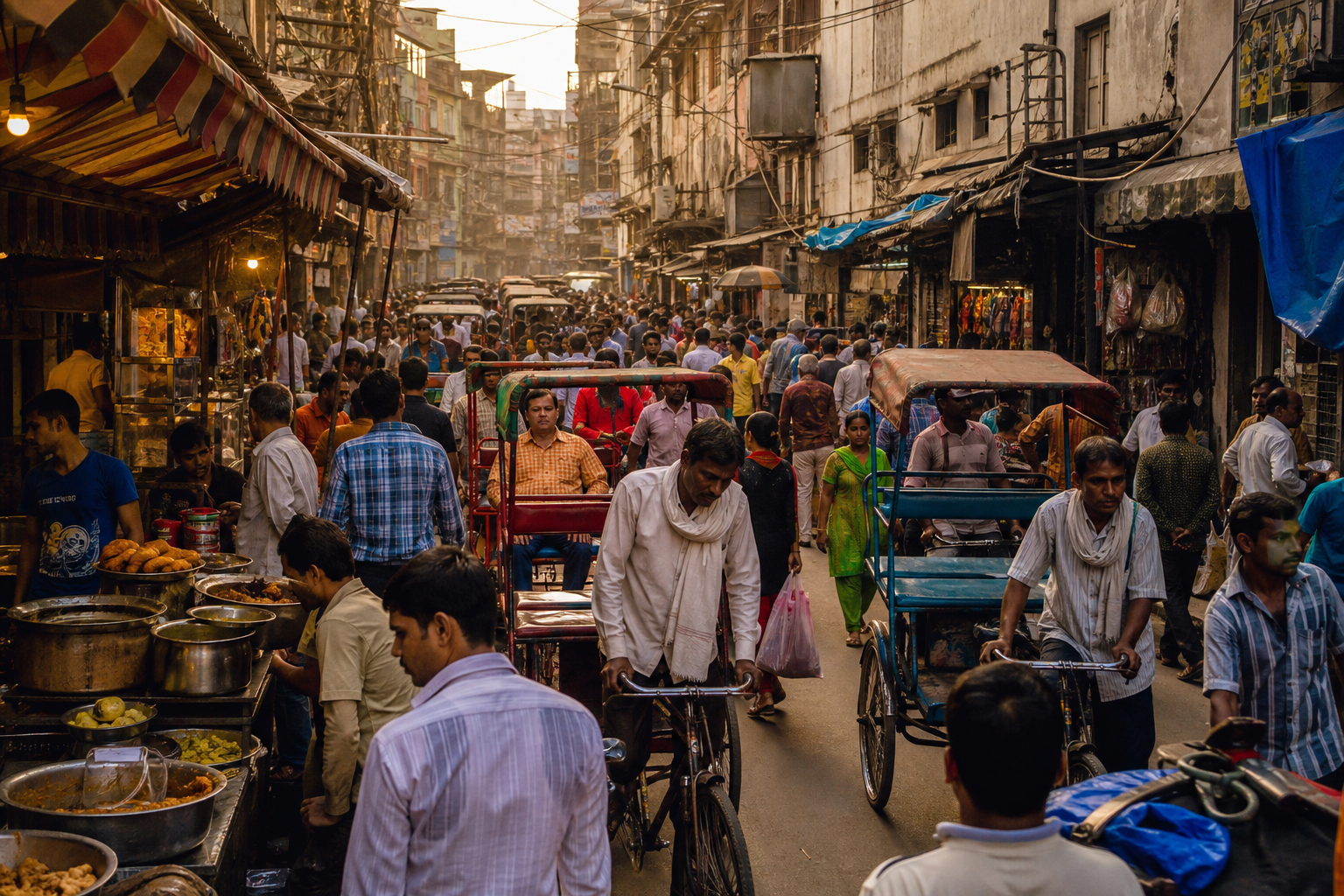
Days 1 to 3: Delhi — Controlled Chaos at Its Best
Delhi is your entry point and it is a world unto itself. Give it three full days.
Day 1 — Old Delhi Immersion
- Start at Jama Masjid, one of India's largest mosques — arrive early to beat the heat
- Walk through the lanes of Chandni Chowk, arguably the most intense street food corridor in Asia
- Visit Raj Ghat, the memorial to Mahatma Gandhi, in the late afternoon when the light softens
- End the evening at a rooftop restaurant overlooking the old city
Day 2 — New Delhi and Monuments
- Qutub Minar complex is worth 2 to 3 hours; the 12th-century iron pillar alone is fascinating
- Humayun's Tomb is a precursor to the Taj Mahal architecturally and far less crowded
- India Gate and the Parliament area for an evening stroll
- Lodi Garden for a quiet, leafy close to the day
Day 3 — Markets and Museums
- National Museum for a solid grounding in Indian history before you travel further
- Dilli Haat for handicrafts from across India — a good place to pick up gifts early
- Hauz Khas Village for dinner in a lakeside heritage complex turned dining and nightlife zone
Getting around Delhi: Metro is clean, affordable, and extensive. Use it whenever possible. Auto-rickshaws for shorter stretches — agree on the fare first.
Days 4 to 5: Agra — The Taj Mahal and Beyond
Agra is roughly 3 to 4 hours from Delhi by train. Book the Gatimaan Express or Shatabdi Express in advance.
Day 4 — The Taj Mahal
- Enter at sunrise. This is non-negotiable. The early light, the thin mist off the Yamuna River, the relatively thin crowds — nothing compares to the Taj at 6 AM
- Spend at least 2 to 3 hours inside the complex; the detail in the inlay work is extraordinary up close
- Head to Mehtab Bagh across the river for the best photograph of the full monument from the outside
Day 5 — Agra Fort and Fatehpur Sikri
- Agra Fort is often skipped in favour of a quick Taj visit and that is a mistake — it is huge, atmospheric, and deeply connected to Mughal history
- Fatehpur Sikri, a UNESCO World Heritage Site about 40 km from Agra, is a ghost city built and abandoned by Emperor Akbar — one of the most underrated stops on any India travel route
Days 6 to 8: Jaipur — The Pink City
Jaipur is 5 hours from Agra. The train journey itself, through the dry Rajasthani landscape, feels like travelling back in time.
Day 6 — Amber Fort and the City
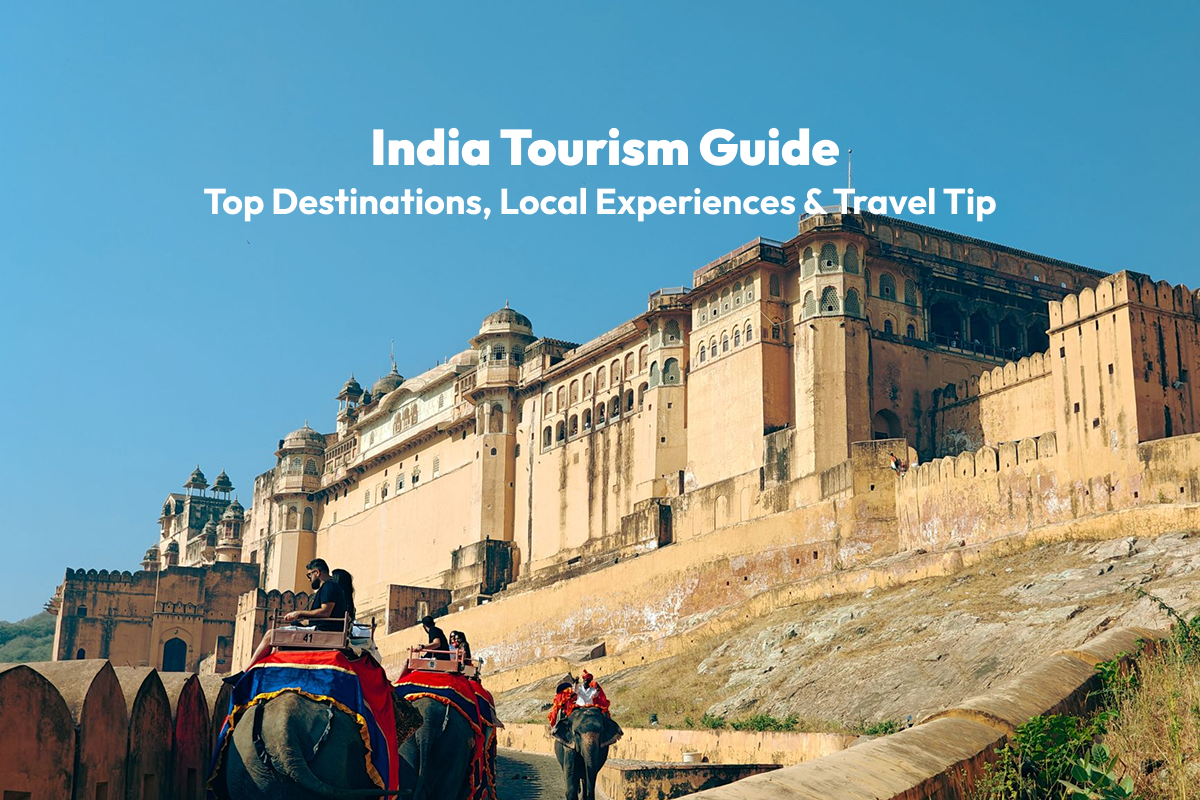
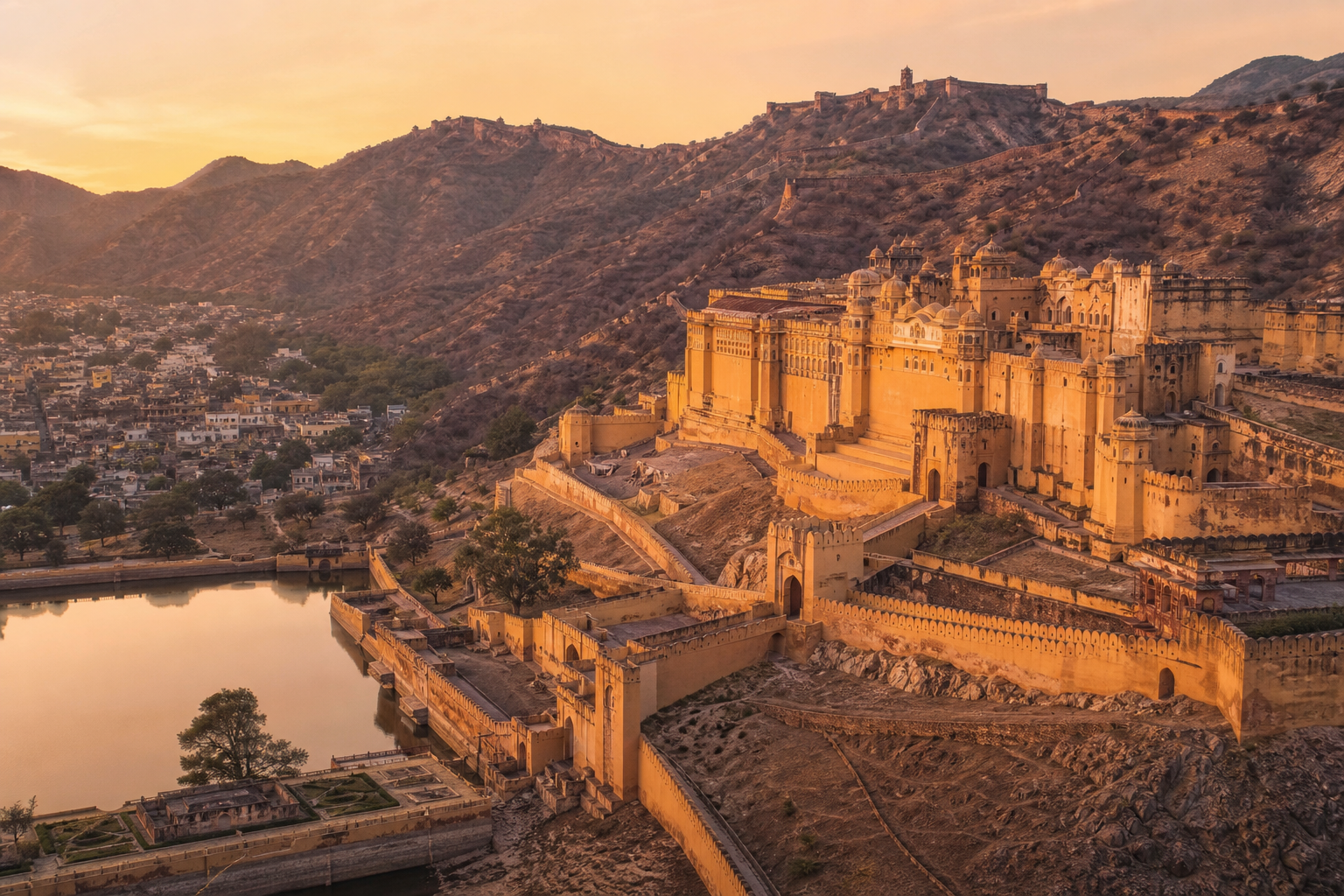
- Amber Fort is the highlight of Jaipur — take an elephant or jeep ride up, or walk the scenic path
- Jal Mahal (the floating water palace) for photographs at sunset
- Walk through the old bazaars in the evening: Johari Bazaar for jewellery, Bapu Bazaar for textiles
Day 7 — City Palace, Jantar Mantar, Hawa Mahal
- City Palace is still home to the royal family of Jaipur and parts of it are open to visitors — the textile museum inside is outstanding
- Jantar Mantar, the 18th-century astronomical observatory, is a UNESCO site and genuinely mind-bending
- Hawa Mahal (Palace of Winds) is iconic for photographs from outside; the interior views of the city from the latticed windows are equally good
Day 8 — Day Trip to Pushkar or Ranthambore
- Pushkar is a 90-minute drive and one of the most sacred Hindu towns in India — the ghats around Pushkar Lake are peaceful and surreal
- If wildlife is your thing, Ranthambore National Park is accessible from Jaipur for a morning or afternoon safari; Bengal tigers are the draw
Days 9 to 10: Varanasi — The Soul of India
Varanasi requires a flight or overnight train from Jaipur. It is unlike anywhere else on earth.
Day 9 — The Ghats at Dawn
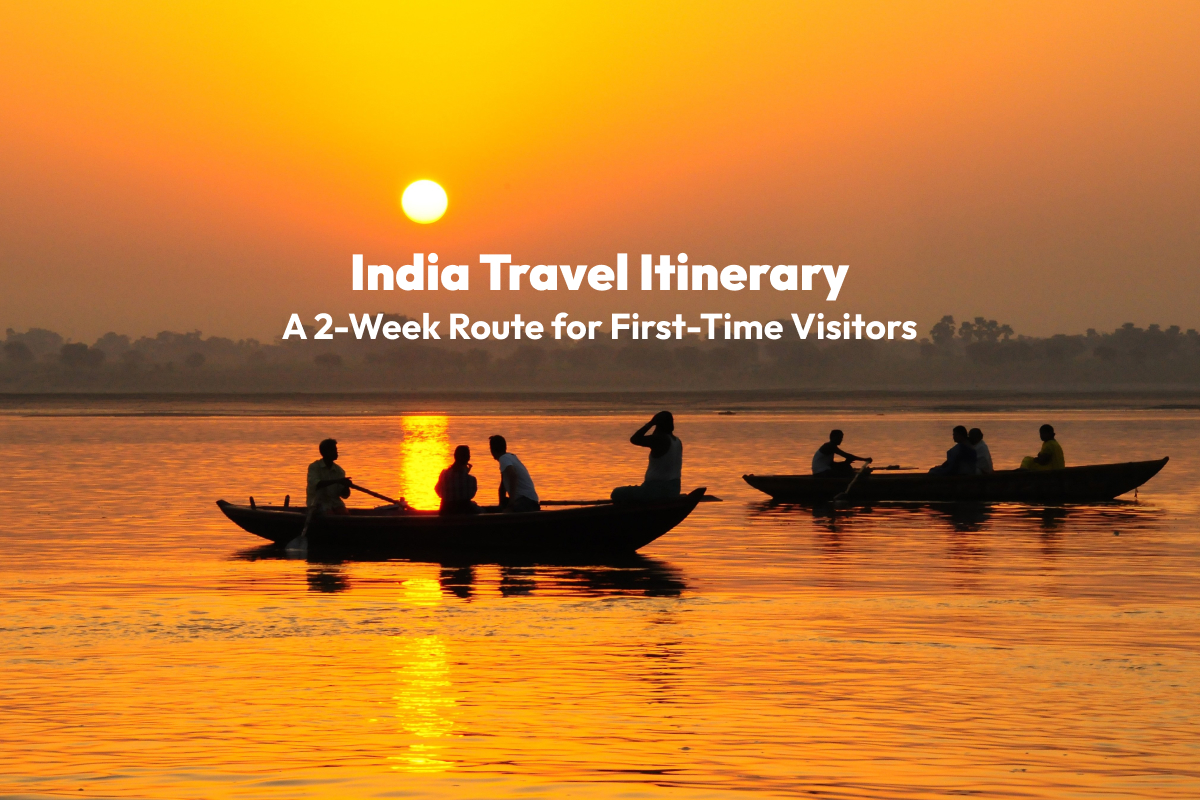
- Wake up at 5 AM and hire a rowboat on the Ganges — watching the city come alive from the water as pilgrims bathe and prayers carry across the river is one of the great travel experiences in the world
- Walk the ghats throughout the morning: each one has a distinct character and story
- Sarnath, 10 km from Varanasi, is where the Buddha delivered his first sermon — the Dhamek Stupa and the museum here are deeply moving
Day 10 — Temples, Food, and the Ganga Aarti
- Visit Kashi Vishwanath Temple (one of the most sacred Shiva temples in India) early morning
- Spend the afternoon exploring the alley food culture — Kachori sabzi, malaiyo in winter, lassi at Blue Lassi (a near-mythical institution)
- The Ganga Aarti ceremony at Dashashwamedh Ghat at sunset is spectacular and not to be missed — arrive 30 minutes early for a good spot
Days 11 to 12: Rishikesh or Amritsar — Choose Your Closing Chapter
Depending on your interests, the final leg can go two directions.
Option A: Rishikesh (Yoga, River, Mountains)
- Yoga capital of the world — morning classes, ashram visits, the Beatles Ashram
- White-water rafting on the Ganges, bungee jumping, camping
- Laxman Jhula and Ram Jhula suspension bridges for walking and views
- Deeply peaceful: a welcome contrast to the intensity of Varanasi
Option B: Amritsar (History, Food, Spirituality)
- The Golden Temple (Harmandir Sahib) is one of the most beautiful and emotionally powerful places in all of India — the langar (community kitchen) feeds 100,000 people free every day
- Wagah Border ceremony at sunset: the daily flag-lowering between India and Pakistan is theatrical, nationalistic, and oddly moving
- Amritsari kulcha and lassi are among the best food experiences in North India
Days 13 to 14: Return to Delhi and Departure
Return to Delhi for final shopping, any sights you missed, and a last meal. Delhi's Indira Gandhi International Airport is the most convenient exit point for this India travel route.
Final day picks
- Khan Market or Connaught Place for last-minute shopping
- Craft Museum, if you want one more cultural stop
- A long, unhurried dinner — try Karim's in Old Delhi, open since 1913
Backpacking India Itinerary: Budget Tips That Actually Work
India is genuinely affordable when you know where to spend and where to save. This backpacking India itinerary advice keeps costs down without cutting corners on experience.
- Trains over flights wherever possible — the train network is extensive, scenic, and cheap. Book on IRCTC at least 2 to 4 weeks in advance.
- Guesthouses in old city neighbourhoods are cheaper and more atmospheric than mid-range hotels in new areas.
- Eat where locals eat — a full thali at a local restaurant is filling, fresh, and costs under ₹150.
- Negotiate auto and taxi fares or use app-based cabs (Ola, Uber) which show fixed fares upfront.
- Free entry at many archaeological sites for children and significantly discounted rates for Indian nationals — foreign tourist pricing is higher at most ASI monuments, so factor that into your budget.
Use an AI Travel Guide App to Navigate India Smarter
One thing first-time visitors quickly discover is that the history behind every monument, neighbourhood, and festival is as rich as the site itself — and a lot of that context is invisible without a guide.
This is where an AI travel guide app genuinely changes the experience. Apps like Gamana give you on-demand audio tours narrated by virtual travel guides with distinct personalities: an analytic historian for Agra's Mughal architecture, a cultural storyteller for Varanasi's ghats, a local voice for Jaipur's bazaars. You hear the stories that a rushed group tour skips, and you hear them exactly when and where they are relevant.
Gamana's self guided India travel format means you move at your own pace, pause when something catches your eye, and go deeper when you want to. There is no group to keep up with, no schedule to follow, and no context lost because you were too far from the guide to hear them properly.
For a self guided India travel experience — especially for first-timers who want depth without the logistics of hiring a private guide everywhere — this kind of AI-powered companion is genuinely useful.
Quick Reference: 2 Week India Itinerary at a Glance
- Days 1 to 3 — Delhi: Old Delhi, Qutub Minar, Humayun's Tomb, markets
- Days 4 to 5 — Agra: Taj Mahal, Agra Fort, Fatehpur Sikri
- Days 6 to 8 — Jaipur: Amber Fort, City Palace, Pushkar day trip
- Days 9 to 10 — Varanasi: Ganges ghats, Ganga Aarti, Sarnath
- Days 11 to 12 — Rishikesh or Amritsar: Yoga/rafting OR Golden Temple/Wagah Border
- Days 13 to 14 — Delhi: Wrap-up, final shopping, departure
Before You Pack Your Bags
No India travel itinerary fully prepares you for the reality of being there. The noise, the kindness of strangers, the food that you will crave for years afterwards, the monuments that make history feel immediate — it all lands differently in person.
Go with flexibility, go with curiosity, and go with the willingness to let the itinerary bend when something unexpected appears. Because in India, it always does.
Ready to explore India with a smarter travel companion? Download the Gamana app and start your self-guided audio journey through some of the most storied places to visit in India.
Ready to explore India on your own terms?
Download the Gamana AI audio guide app and turn Delhi, Agra, Jaipur, and Varanasi into a self-guided journey with rich context at every stop.